

Dark specks in a bathroom corner are easy to spot, and a fresh coat can look like the quick fix. It isn't. Mold paint isn't a cover-up, so don't paint over mold, even with a mold-resistant paint. The US EPA says to clean up the mold and dry the surface before painting, and warns that paint applied over moldy surfaces is likely to peel. Here's how to get the surface ready so your fresh coat has something solid to stick to.
Why Mold Paint Isn't a Cover-Up
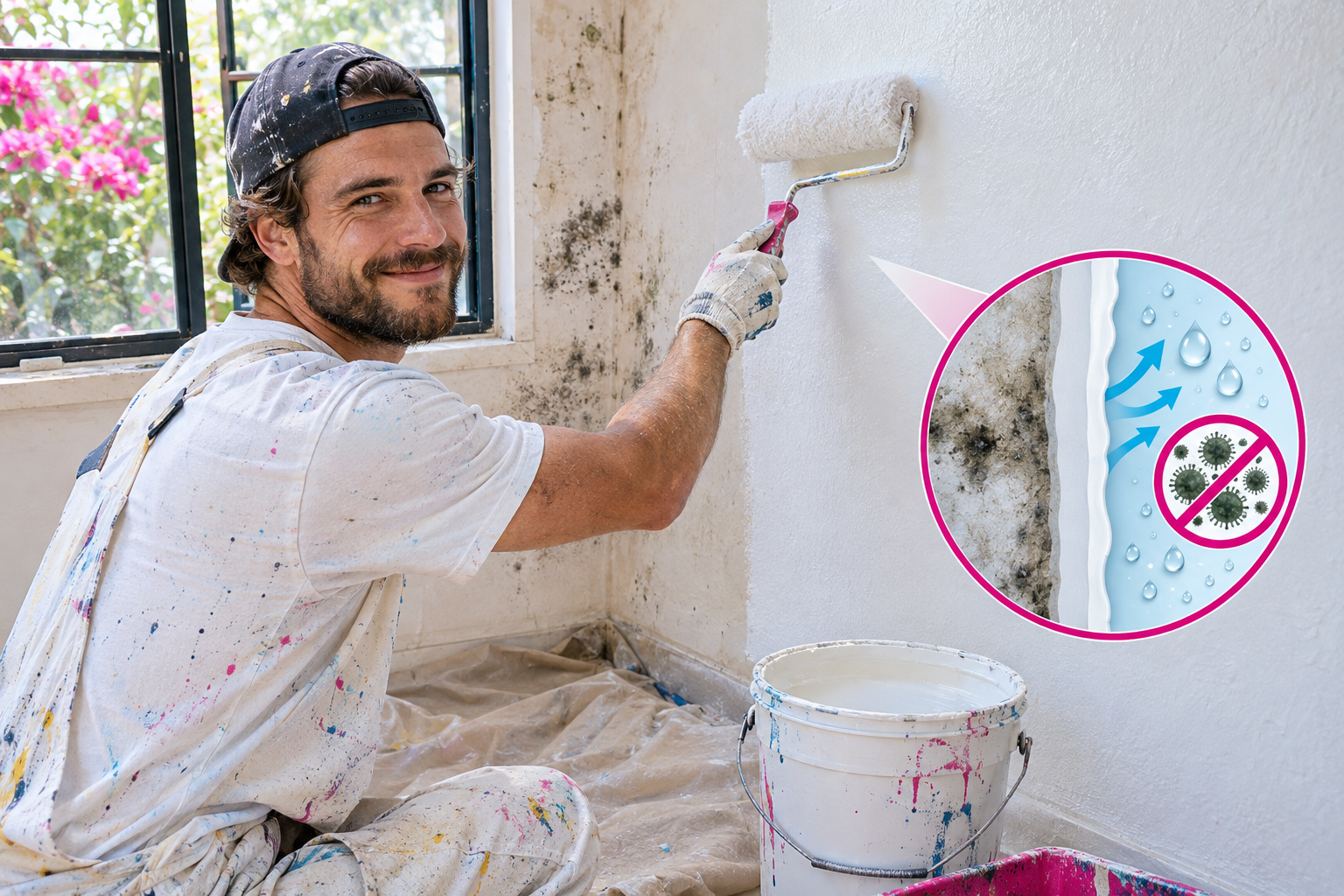
It's tempting. You see a dark patch in the bathroom corner, you grab a can with "mold-resistant" on the label, and you roll over it. The problem is what those products actually claim. Benjamin Moore describes its Insl-X Aqua Lock Plus Primer as containing an agent that inhibits mildew growth on the surface of the paint film. Sherwin-Williams says something similar about one of its coatings: anti-microbial agents that inhibit the growth of mold and mildew on the surface of the film.
Notice the wording. These protect the paint's surface. Neither passage says the paint treats mold already living underneath. So think of mold paint as a finishing step on a clean, dry wall, not a fix for a damp one.
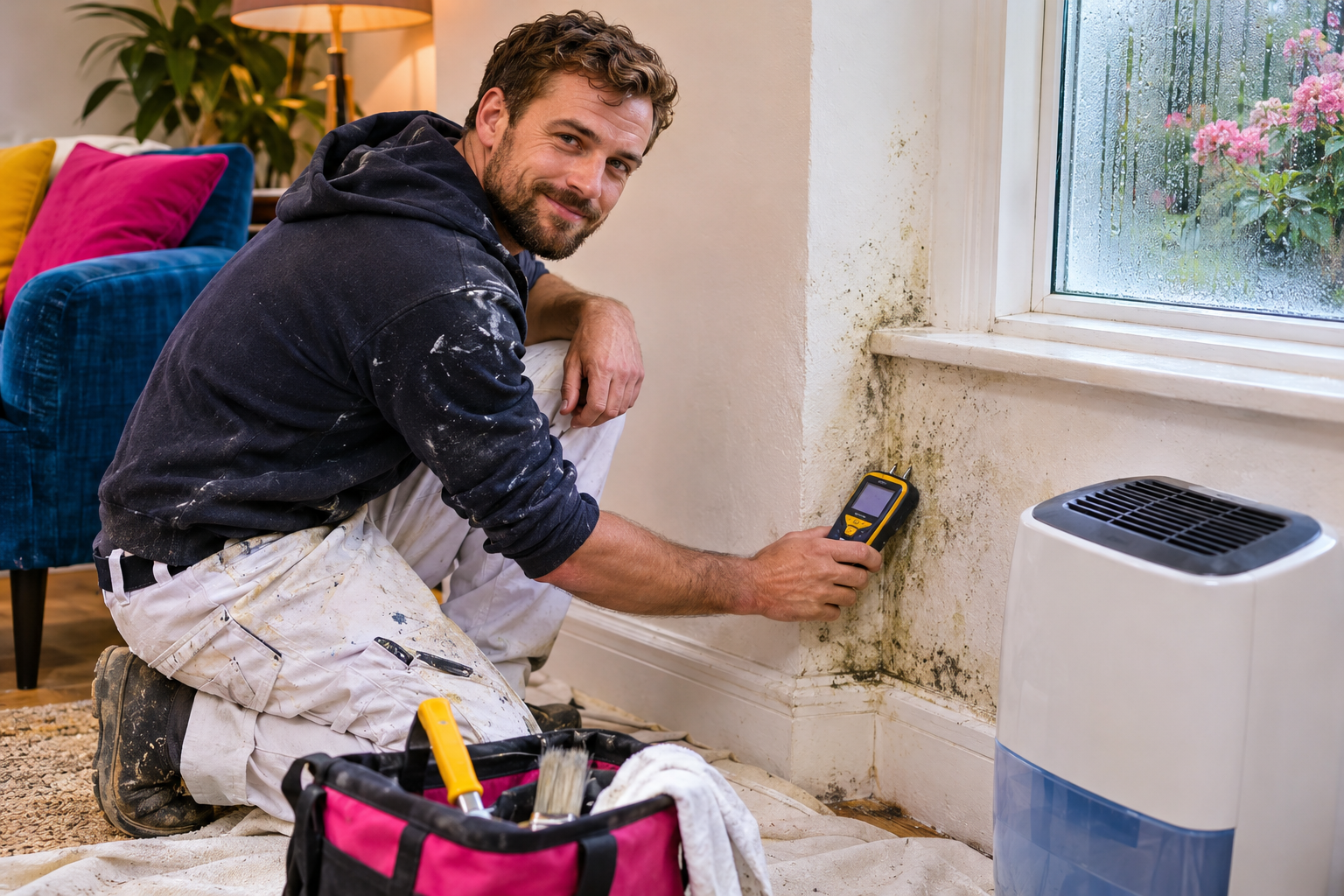
What to Do Before You Paint
The EPA's guidance gives a clear order of attack. Follow it as written:
- Fix the water problem. The EPA says to fix plumbing leaks and other water problems as soon as possible, and cleanup isn't finished until the water or moisture problem is completely fixed.
- Protect yourself. The EPA suggests wearing an N-95 respirator so you don't breathe in mold or spores.
- Scrub hard surfaces. Use detergent and water, then dry completely.
- Judge porous materials. Items like ceiling tiles and carpet may have to be thrown away if they become moldy.
How Do You Know the Wall Is Ready?
Do a simple check before you open any paint. Look at the spot in good light. Is it free of staining and growth after cleaning? Does it feel dry to the touch? Has the leak or condensation source been dealt with? If the answer to any of those is "not sure," wait. A rushed coat over a damp wall is how you end up repainting the same corner next year.
If the patch keeps coming back after you've cleaned and dried it, the moisture problem isn't solved yet. Painting over it won't fix that.
Keeping Mold From Returning
Humidity is the long game. The EPA recommends keeping indoor humidity below 60 percent, ideally between 30 and 50 percent. A small hygrometer is an inexpensive way to see where your home sits, especially in bathrooms, basements and laundry areas.
Once the Surface Is Sound
This is where paint choice and good prep pay off. A clean, dry wall takes a finish with clean lines and smooth coverage, and a mildew-inhibiting product can be a sensible choice in a damp-prone room. If you're planning a refresh, our interior painting tips for Orangeville homes cover what good preparation looks like, and our guide to the best paint finish for kitchens helps with picking a sheen for busy, steamy rooms.
Want help putting this into practice? Colour your life paint & design is here to help. Call now
Ready when you are
Planning a paint job?
Get a free estimate from Casey Cole and the crew. We will walk you through the project from colour to clean-up. See how our interior painting service works.

